
 Cart is empty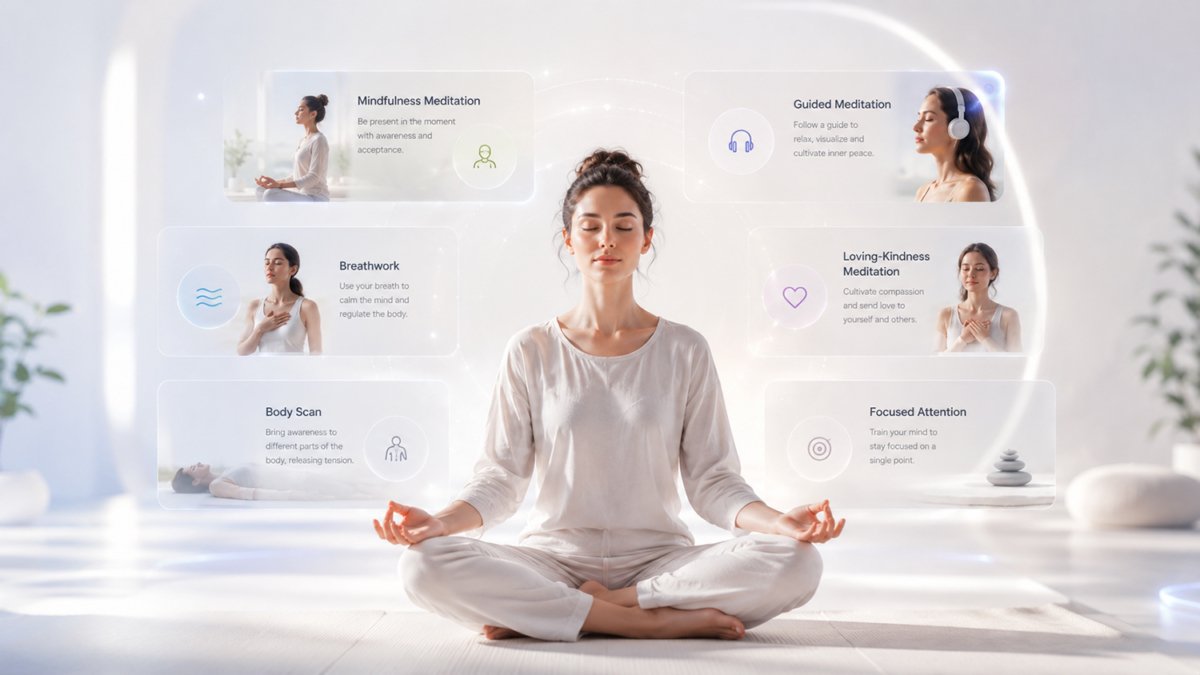
Meditation is not a one-size-fits-all practice. There are many styles and techniques, each offering a different way to practice attention, awareness, relaxation, or reflection. Some practices are guided, some are silent, some involve movement, and others use the breath, sounds, or physical sensations as a point of focus. (Ela Innovations)
The best type of meditation is often the one that feels comfortable, fits naturally into your routine, and encourages you to practice consistently.
1. Types of Meditation by Method
Guided Meditation
Guided meditation involves following spoken instructions from a teacher, recording, or app.
The guide may direct your attention toward your breathing, physical sensations, sounds, visualization, or another mindfulness exercise.
Guided sessions can be a useful starting point for beginners who prefer more structure.
Unguided Meditation
Unguided meditation is practiced without spoken instructions.
You choose your own point of attention and practice independently. This might involve focusing on the breath, observing thoughts and sensations, or simply sitting quietly with awareness.
Some people prefer silent practice, while others use gentle ambient sounds or nature audio as part of the experience.
2. Types of Meditation by Body Position
Meditation can be practiced in different positions depending on comfort, environment, and the type of activity.
Seated Meditation
One of the most common approaches.
You can sit on a chair, cushion, or another comfortable surface while maintaining a relaxed and natural posture.
Lying-Down Meditation
Meditation can also be practiced while lying comfortably.
This position is often used for body scans, relaxation exercises, or evening mindfulness routines.
Walking Meditation
Walking meditation brings mindful attention into gentle movement.
Instead of walking automatically, you notice your steps, physical sensations, breathing, and surroundings.
Standing Meditation
Some mindfulness practices can be performed while standing.
Attention may be directed toward posture, breathing, balance, or physical sensations.
3. Types of Meditation by Purpose
Different meditation practices can emphasize different aspects of the experience.
Breathing Meditation
Breathing meditation uses the natural rhythm of your breath as the main point of attention.
Notice each inhale and exhale. When your attention wanders, gently return to your breathing.
It is one of the simplest ways to begin practicing meditation.
Morning Meditation
Morning meditation creates a short intentional pause at the beginning of the day.
You might practice breath awareness, mindfulness, gratitude, or a short guided session before beginning your regular activities.
Focus Meditation
Focus meditation involves directing attention toward one specific object or experience.
Your focus might be:
- Your breathing
- A sound
- A visual object
- A word or phrase
- A physical sensation
When your attention wanders, notice it and gently return to your chosen focus.
Relaxation Meditation
Relaxation meditation creates time to slow down and step away from everyday distractions.
Practices may include gentle breathing, visualization, body awareness, calming sounds, or guided mindfulness.
The goal is not to force yourself into a particular state, but to create space for a quieter and more intentional experience.
Mindfulness for Everyday Stress
Mindfulness can be practiced during busy or demanding moments as a way to pause and return attention to the present.
A short session may involve observing your breathing, noticing physical sensations, or simply taking a few minutes away from distractions.
Mindfulness for Social Situations
Mindfulness can also be practiced before or during everyday social situations.
The practice may involve noticing your breathing, surroundings, physical sensations, and where your attention is directed.
Rather than trying to create a specific emotional outcome, the focus remains on present-moment awareness.
Confidence and Self-Reflection Meditation
Some guided meditation practices use reflection, visualization, or mindful awareness to explore personal goals and experiences.
These sessions can create an intentional space for reflection without requiring you to judge or change what you notice.
Gratitude Meditation
Gratitude meditation involves intentionally bringing attention to people, experiences, or everyday moments you appreciate.
You may reflect silently, follow a guided exercise, or write down a few things you are grateful for after the session.
Mindfulness Meditation
Mindfulness meditation focuses on present-moment awareness.
You observe thoughts, sensations, sounds, or your breathing without immediately reacting to what you notice.
When your attention wanders, you gently return to the present.
Body Awareness Meditation
Body awareness meditation directs attention toward physical sensations.
Rather than trying to change those sensations, you simply notice them with curiosity.
This approach is often part of body scan and mindfulness practices.
Body Scan Meditation
A body scan involves gradually moving attention through different areas of the body.
You might begin with your feet and slowly move upward, noticing sensations along the way.
The purpose is awareness rather than trying to produce a particular result.
Loving-Kindness Meditation
Loving-kindness meditation is a reflective practice centered on goodwill, kindness, and compassion.
A session may involve silently directing kind intentions toward yourself and then gradually extending them toward other people.
Evening Wind-Down Meditation
An evening meditation can become part of a personal wind-down routine.
You might choose gentle breathing, body awareness, calming sounds, or a guided mindfulness session to create a quieter transition at the end of the day.
4. Types of Meditation by Focus Point
Breath Focus
Use your breathing as an anchor for attention.
Notice the natural movement of each inhale and exhale and return to the breath whenever you become distracted.
Body Awareness
Bring attention to physical sensations in different areas of your body.
You may notice contact with the chair, movement while breathing, or sensations in your hands and feet.
Visual Object Focus
Choose a simple visual object such as a flower, candle, or another everyday object.
Observe its shape, texture, light, and details while repeatedly returning your attention to what you see.
Sound Focus
Use a sound as your main point of attention.
This could include nature sounds, gentle ambient audio, a bell, or sounds naturally present in your environment.
Task-Based Mindfulness
Everyday activities can also become opportunities for mindfulness.
You might practice while:
- Walking
- Washing dishes
- Drinking tea
- Eating
- Drawing
- Listening to music
The idea is to give fuller attention to the activity rather than performing it automatically.
5. Meditation in Spiritual and Cultural Traditions
Meditative practices appear in many cultural, philosophical, and spiritual traditions. Their meaning and methods can vary significantly depending on the tradition. (Ela Innovations)
Christian Meditation
May involve prayer, scripture, contemplation, or silent reflection.
Jewish Meditation
Can include prayer, contemplation, visualization, or focused reflection within Jewish traditions.
Sufi Meditation
Certain Sufi traditions include contemplative practices, repeated phrases, breathing, remembrance, or focused attention.
Buddhist Meditation
Buddhist traditions include a wide range of practices involving attention, awareness, compassion, and contemplation.
Hindu Meditation Traditions
Various Hindu traditions include mantra practice, breath awareness, contemplation, yoga, and other forms of meditation.
People may approach these practices spiritually, culturally, or simply with an interest in learning about different meditation traditions.
6. Traditional and Spiritual Meditation Practices
Some meditation systems are based primarily on traditional, philosophical, or spiritual frameworks rather than modern scientific models.
These may include:
Qigong Meditation
Combines attention, breathing, posture, and gentle movement within traditional Chinese practices.
Taoist Meditation
Includes a variety of contemplative practices associated with Taoist philosophy and tradition.
Chakra Meditation
A spiritual practice involving attention directed toward traditional concepts of energy centers.
Third-Eye Meditation
A contemplative practice found in some spiritual traditions that directs attention toward the area between the eyebrows or toward related symbolic concepts.
Nada Yoga
A traditional practice centered on attentive listening and the use of sound.
These practices can be explored as cultural or spiritual traditions without treating their traditional concepts as medical measurements or established biological mechanisms.
7. Other Popular Meditation Styles
Yoga Meditation
Yoga can combine physical movement, breathing, body awareness, and meditative attention.
Some practices are movement-based, while others focus more heavily on stillness and contemplation.
Mantra Meditation
Mantra meditation uses repeated words, phrases, or sounds as an anchor for attention.
When the mind wanders, attention is gently returned to the mantra.
Transcendental Meditation
Transcendental Meditation, often abbreviated as TM, is a specific meditation technique involving the silent repetition of a mantra. (Ela Innovations)
Visualization Meditation
Visualization meditation involves intentionally imagining a scene, object, or experience.
A guided visualization might ask you to imagine a quiet natural environment or another calming setting while maintaining attention on the experience.
Gratitude Meditation
Gratitude practices intentionally direct attention toward things you appreciate.
They can be performed independently or as part of a guided mindfulness session.
8. Simple Meditation Techniques for Beginners
Simple Breath Awareness
Find a comfortable position.
Allow your breathing to remain natural.
Notice each inhale and exhale.
When your attention wanders, gently return to your breathing.
Continue for a few minutes.
Object-Focused Meditation
Choose a simple object such as a flower.
Sit comfortably and observe it carefully.
Notice:
- Shape
- Texture
- Details
- Light and shadow
- Color
- Your own changes in attention
Whenever you notice your mind wandering, gently bring your attention back to the object.
Five-Minute Mindfulness Practice
Sit comfortably and choose one point of attention.
For five minutes:
- Notice your breathing.
- Observe when your attention wanders.
- Acknowledge the distraction without judgment.
- Return your attention to your breathing.
- Repeat until the session ends.
There is no need to achieve a perfectly quiet mind.
Noticing and returning is part of the practice.
How Do You Choose the Right Type of Meditation?
There is no single meditation style that is best for everyone.
You may prefer:
Guided meditation if you like structure.
Breath meditation if you want something simple.
Mindfulness meditation if you want to practice present-moment awareness.
Focus meditation if you enjoy working with a specific attention anchor.
Walking meditation if sitting still does not appeal to you.
Body scan meditation if you prefer body awareness.
Visualization if you enjoy working with mental imagery.
Try different approaches and notice which ones fit most naturally into your routine.
Consistency is usually more useful for building a practice than searching for the “perfect” meditation technique.
Bringing EEG Feedback Into Meditation
Meditation is traditionally based largely on personal experience and awareness.
EEG technology can add another layer of information by recording electrical brain activity during a session.
The ela smart EEG headband captures EEG signals while you practice meditation, mindfulness, relaxation, or focused attention. The ela App then turns selected session data into easy-to-understand EEG-based feedback.
With ela, you can:
- Explore real-time EEG-based session indicators
- Choose from different guided meditation activities
- Practice mindfulness and focused attention
- Receive interactive feedback during selected sessions
- Review session summaries
- Observe patterns across your practice over time
- Build a more consistent meditation routine
ela does not read thoughts, interpret emotions, or diagnose mental states. Its EEG-based information provides an additional way to explore patterns during your meditation practice.
Which Type of Meditation Should You Try First?
If you are completely new to meditation, keep it simple.
Start with a short breath-awareness or guided mindfulness session.
Practice for a few minutes.
Notice when your attention wanders.
Gently return.
Once that feels familiar, you can explore other approaches such as visualization, body scans, walking meditation, sound-based meditation, or focused-attention exercises.
There is no single “right” way to meditate.
The goal is to find an approach that fits your lifestyle and makes it easier to return to your practice consistently.
Explore Meditation with ela
ela combines EEG sensing, guided meditation, AI-powered guidance, interactive feedback, and session insights in one connected experience.
Explore different meditation practices, follow your EEG-based session patterns, and create a mindfulness routine that works naturally with your everyday life.
Explore ela
General Wellness Notice
ela is intended for general wellness, mindfulness, meditation, relaxation, focus practice, and self-awareness purposes. It is not intended to diagnose, treat, cure, mitigate, or prevent any disease or medical condition. EEG-based information provided by ela is intended for general wellness and informational purposes and should not be interpreted as medical or diagnostic information.